Morocco Money Guide: Tipping, Dirhams, and Souk Bargaining
One of the most exciting parts of visiting Morocco is plunging into the vibrant local economy—from sipping mint tea to browsing for crafts in the sprawling souks. To ensure a smooth, stress-free trip, here is your essential guide to handling money, tipping, and the art of bargaining. Moroccan Currency Essentials The official currency is the […]
One of the most exciting parts of visiting Morocco is plunging into the vibrant local economy—from sipping mint tea to browsing for crafts in the sprawling souks. To ensure a smooth, stress-free trip, here is your essential guide to handling money, tipping, and the art of bargaining.
Moroccan Currency Essentials
The official currency is the Moroccan Dirham (MAD).
-
Cash is King: While major hotels and large restaurants in tourist centers (Marrakech, Casablanca) accept credit cards, cash is essential for street food vendors, small shops, taxis, and tipping.
-
Getting Cash: The best way to get Dirhams is by using bank-affiliated ATMs (Distributeur Automatique de Billets) upon arrival at the airport or in major cities. Your debit card usually offers the best exchange rate.
Tipping (Baksheesh) Etiquette
Tipping, or baksheesh, is a common and expected practice in Morocco. It’s often a significant part of the income for service workers.
| Service | Recommended Tip | Notes |
| Cafés & Small Restaurants | Round up to the nearest 5 or 10 MAD, or 5-10% of the bill. | |
| Taxis | Round up to the nearest 5 MAD. For long rides, 10-20 MAD. | Always agree on the fare before getting in if the meter is not used. |
| Tour Guides | 50-100 MAD per person, per full day. | More for exceptional service. |
| DMC Drivers | 100-200 MAD per day from the whole group/couple. | Tip at the end of the trip for excellent service and reliability. |
| Baggage Handler/Porter | 5-10 MAD per bag. | Especially important in Riads or the Medina where access is difficult. |
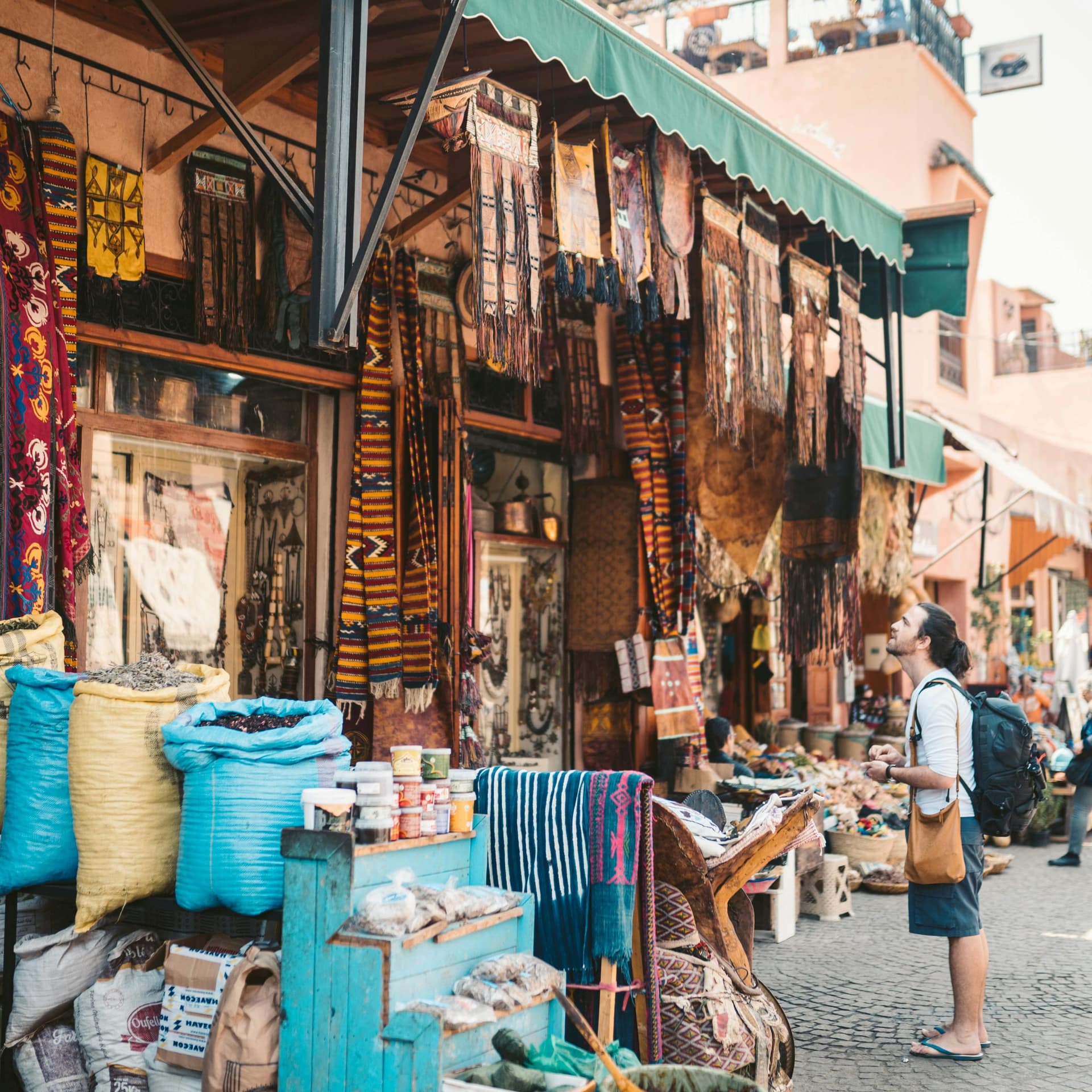
The Art of Bargaining (Souk Secrets)
Bargaining is a cultural ritual in the souks and should be approached with good humor and respect.
-
The First Price: The seller will always start high. As a general rule, the final price should be around 40-50% of the starting price, depending on the item and your negotiating skill.
-
Know Your Limit: Before you begin, decide the maximum you are willing to pay and stick to it.
-
Be Friendly and Casual: Bargaining is a conversation, not a fight. Smile, share a cup of mint tea if offered, and be respectful. If you can’t agree on a price, a polite Shukran (Thank you) and walking away is fine—sometimes the seller will call you back with a better price!
-
When NOT to Bargain: Do not bargain for food/drinks at established restaurants, fixed-price co-operatives, or street food stalls.